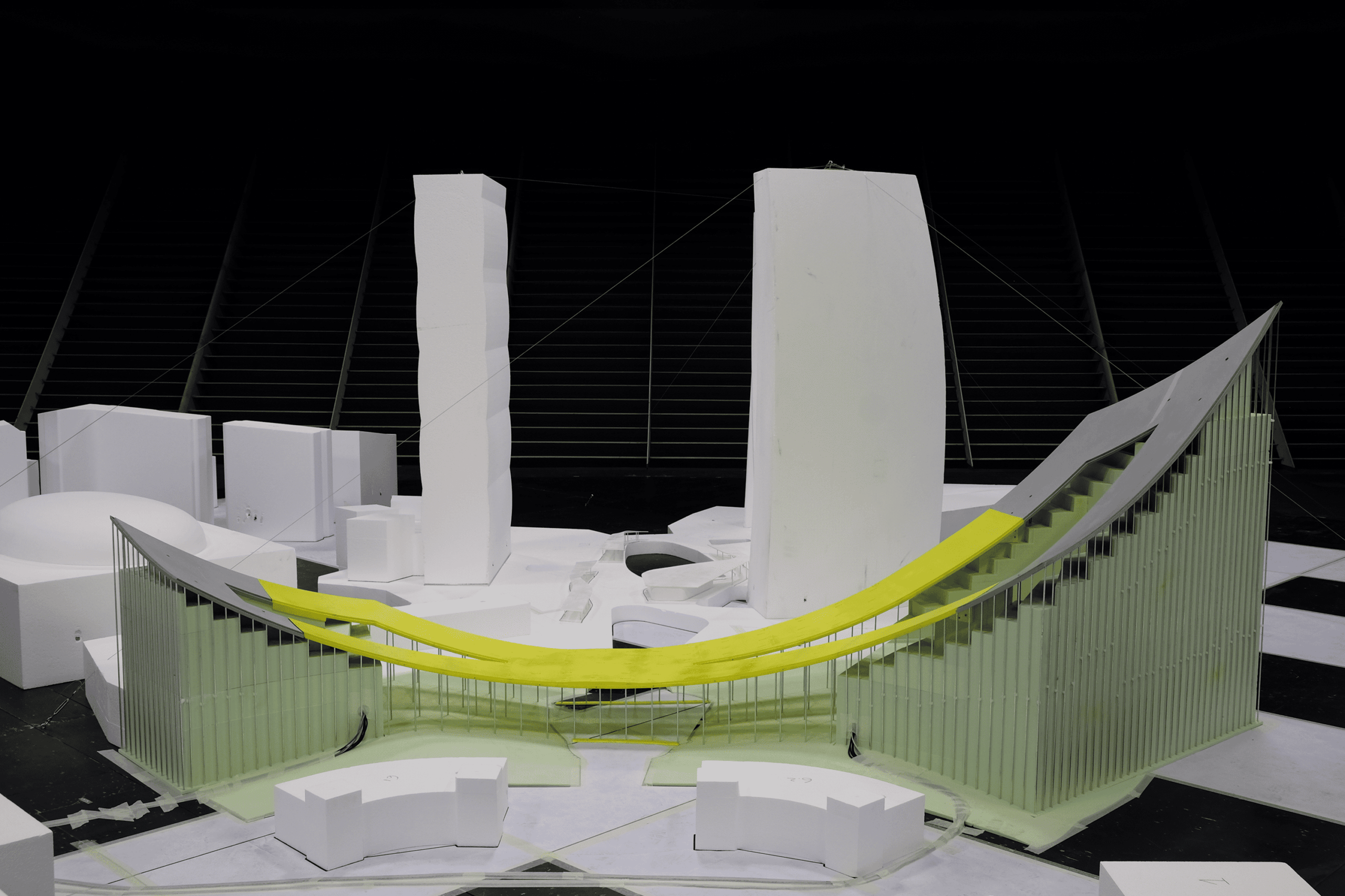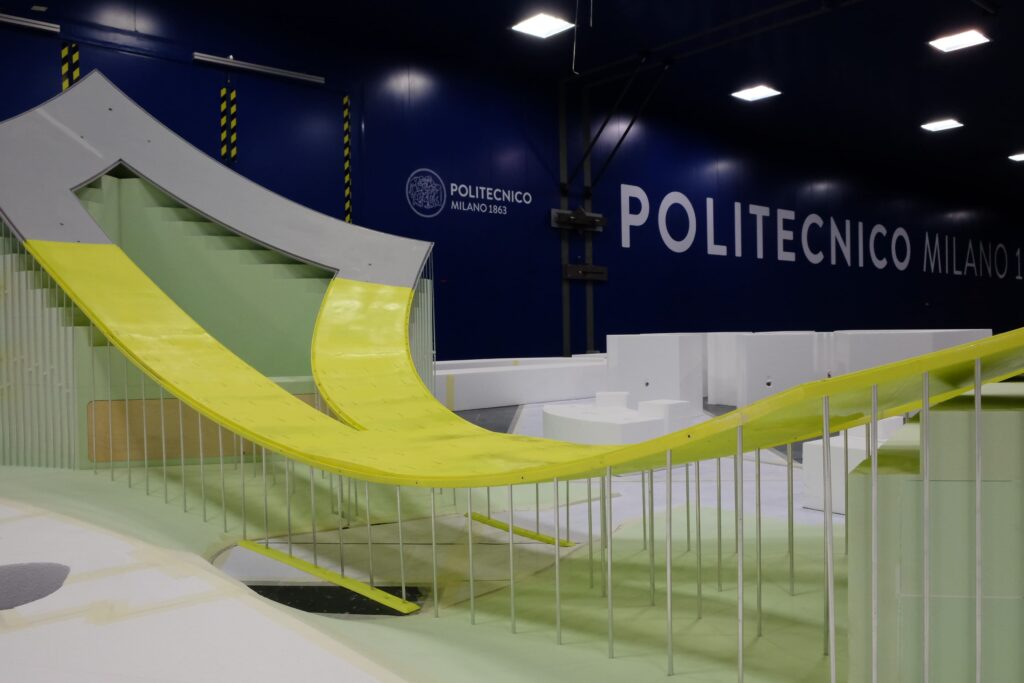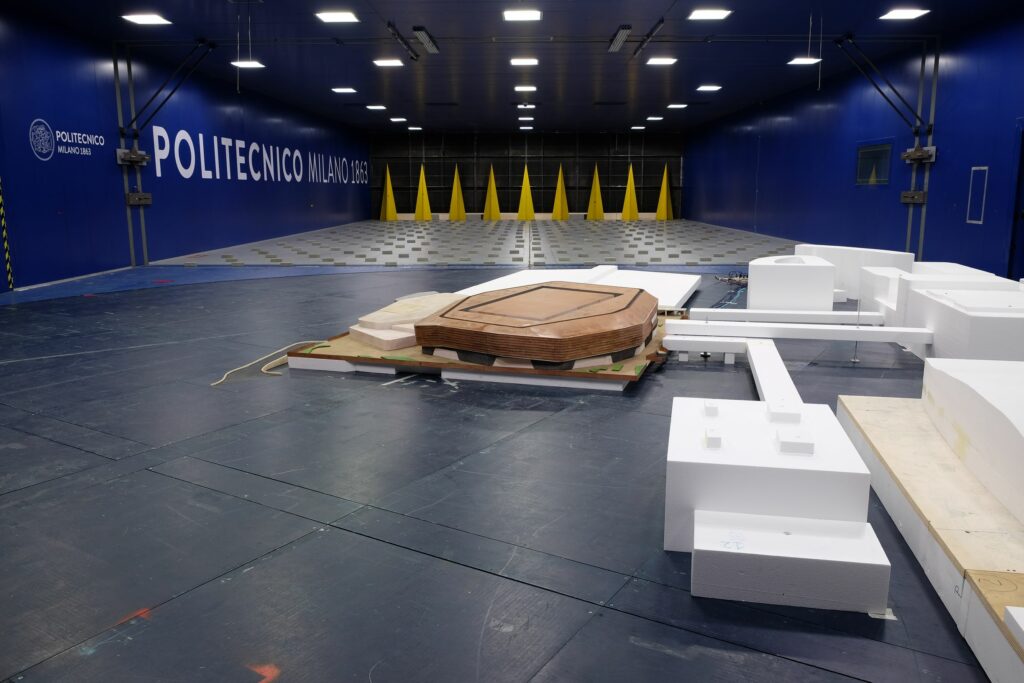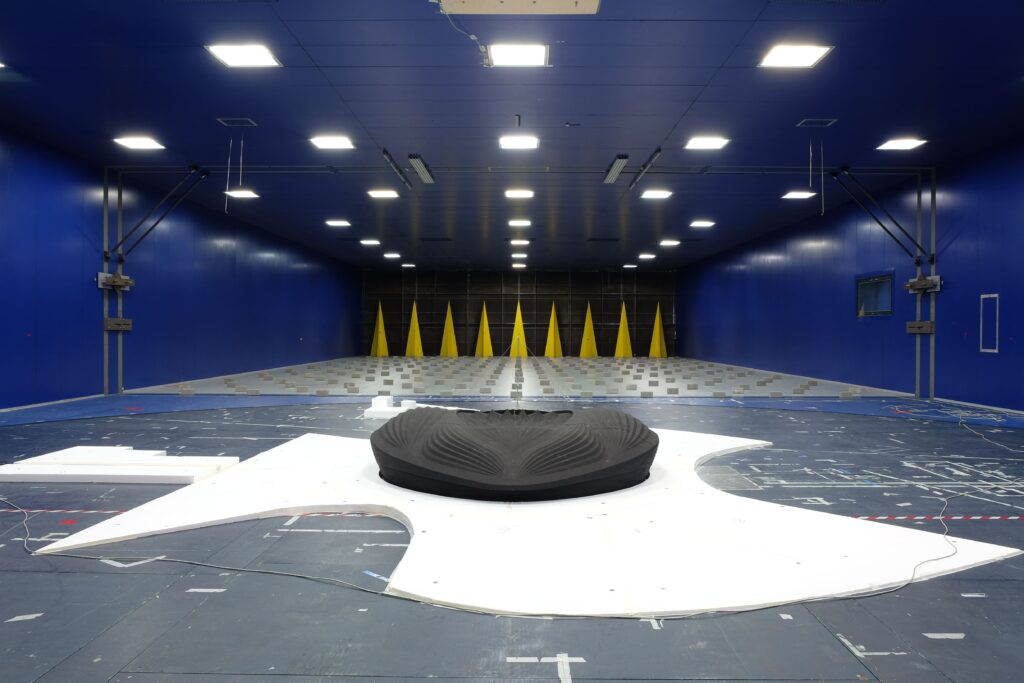

Wind tunnel studies of the aerodynamics of structures such as large roofs provide data for optimum design and identifies possible unexpected wind-induced problems, since interaction between fluid and structures can result in an important dynamic response that needs to be considered. Usually, the assessment of the wind loads on large roofs does not depend only on wind pressure loads, but also on the structure dynamics, therefore the data analysis involves the application of the wind pressures on the structure.
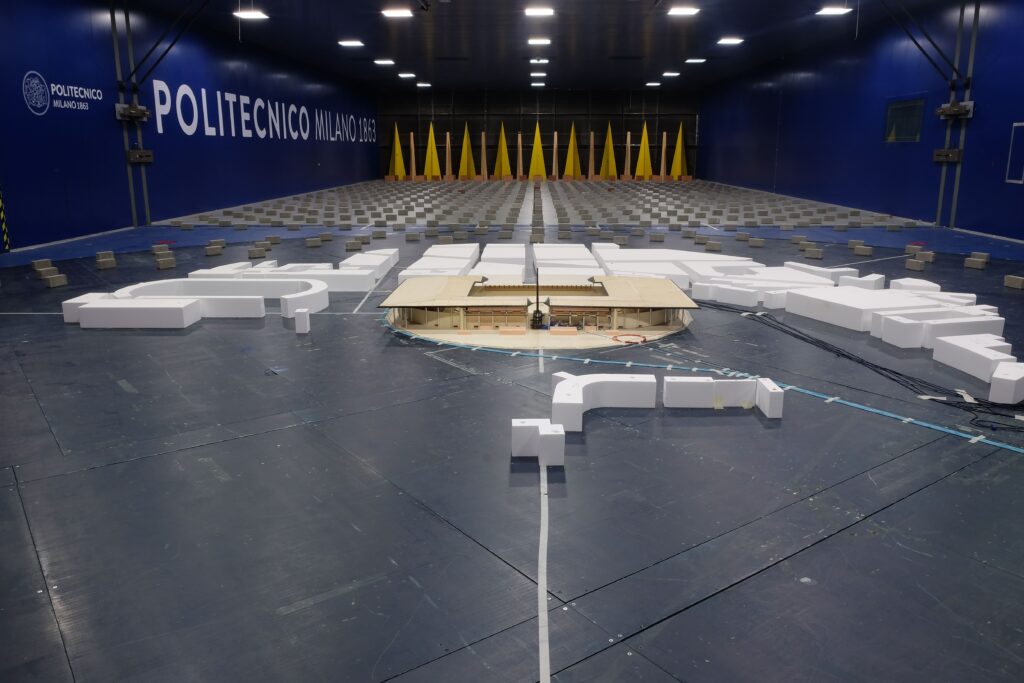
The typical scale of the wind tunnel models are between 1:25 to 1:250, depending on the dimension of the structure. Stadiums are generally realized between 1:100 and 1:250 scale. The large scale models allow for a better reproduction of geometrical details, relevant for the assessment of wind-structure interactions.
Wind tunnel data may be used as a reference for computational fluid-dynamics (CFD) studies, allowing the development and tuning of numerical codes that may be integrated into the design of the structures. Furthermore, the definition of wind levels in pedestrian areas is helpful for wind comfort analysis.
Wind tunnel workshops may focus on the solution of possible aerodynamic issues. This is particularly useful in the case of stadiums, where the wind can be evaluated on the pitch, on the grandstands, or outside the bowl area.