
Solar energy has become a cornerstone of green energy solutions, with photovoltaic (PV) technology playing a central role in the shift toward cleaner power generation. Among the advancements in this field, PV trackers stand out as a significant innovation. Unlike fixed solar panels, these systems can move to follow the sun trajectory throughout the day, enhancing sunlight capture and significantly boosting energy output. This makes PV trackers a highly efficient and economically attractive option, particularly for large-scale installations. Despite their advantages, designing and implementing PV trackers involves specific challenges, especially regarding their interaction with environmental factors such as wind. Wind tunnel testing is therefore crucial to replicate real operating conditions and ensure both structural reliability and performance. By analyzing how PV trackers respond to different wind loads, engineers can refine their designs to withstand extreme weather conditions, improving durability and ensuring consistent operation.
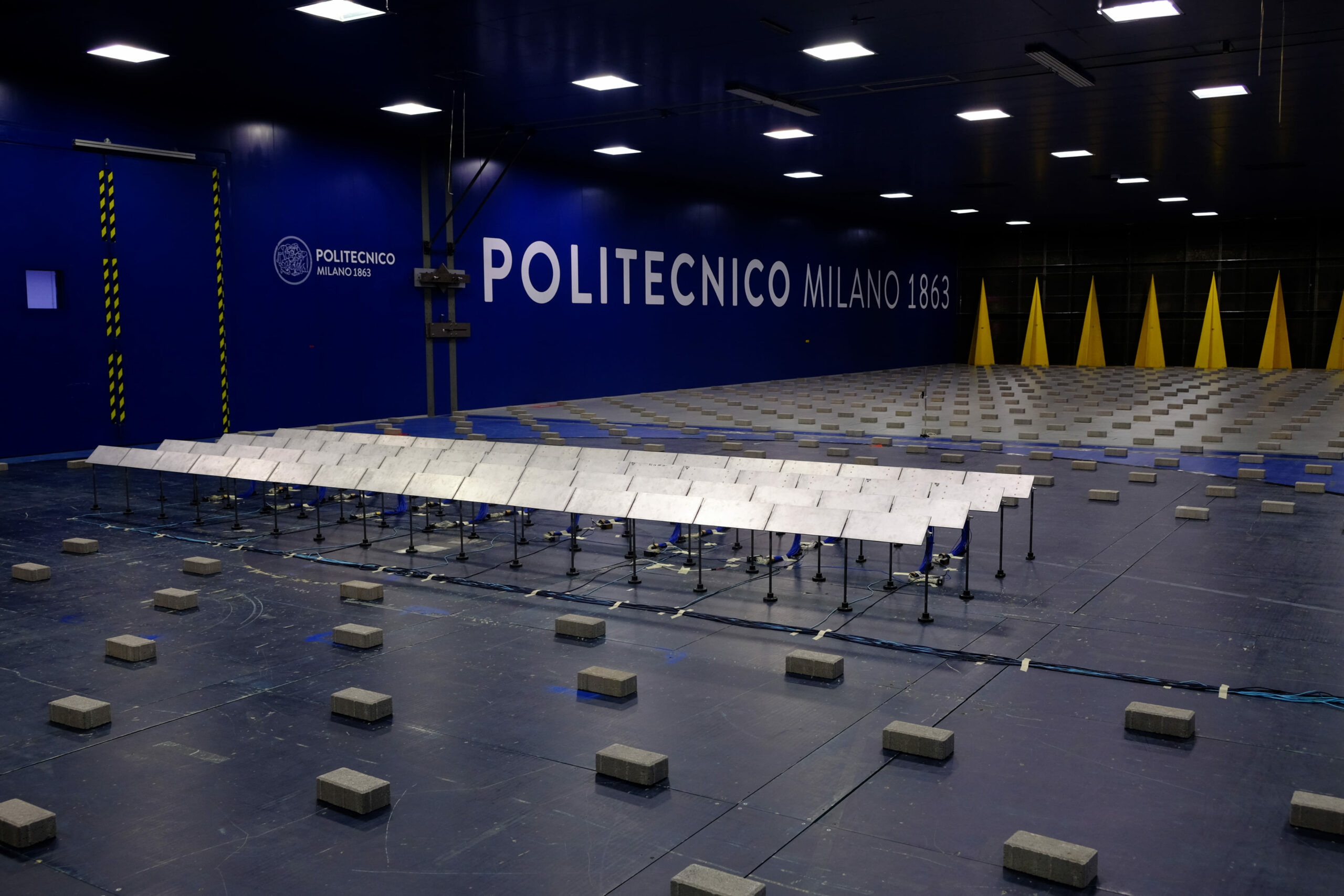
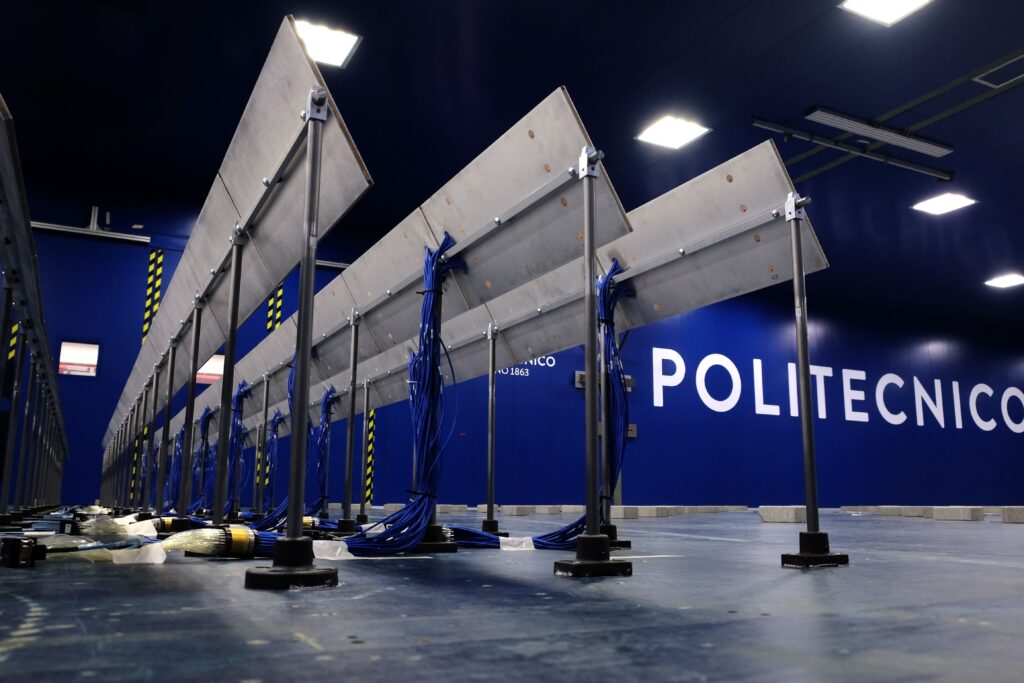
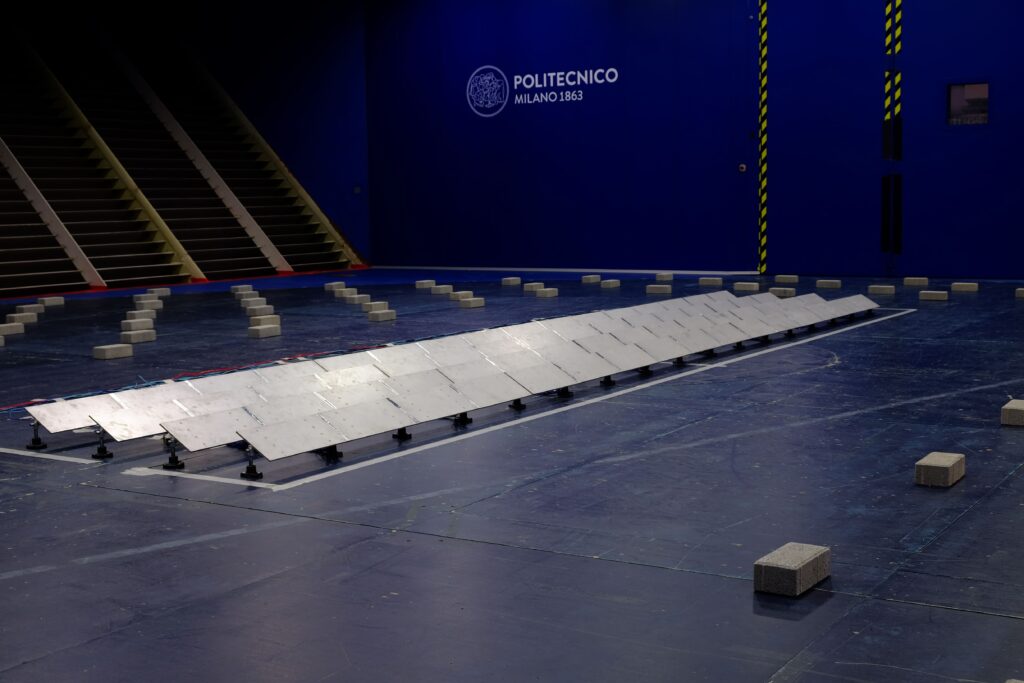
Tests performed at Politecnico di Milano Wind tunnel focus on two types of investigations. The first involves measuring wind pressure distribution on rigid models, scaled at approximately 1:15, which represent sections of a PV plant. These measurements are used to estimate the resulting forces and moments acting on the supporting structures, including the interaction effects between the panels in the power plant and the effects of the Atmospheric Boundary Layer (ABL). The second type of study employs sectional models to examine fluid–structure interactions and determine the critical wind speed at which instability may occur. These tests are carried out on models with scales ranging from 1:4 to 1:2, using established methodologies from bridge deck aerodynamics. Both suspended and forced motion tests are performed, enabling the identification of flutter derivatives and the evaluation of critical velocities.
Experimental campaigns carried out in recent years enable detailed measurements of aerodynamic loads, wake development, and turbine–turbine interactions, which are critical for understanding wind farm performance. The data collected in the wind tunnel are used to validate and improve both high-fidelity and engineering-level simulation tools, contributing to the design of more efficient and reliable wind turbines.